10 October 2026
Understanding the Risk of Radon in Basement Spaces
Presented by @radonbasementplus
Why the Basement Matters Most
If you have spent any time in a home with a basement, you know that space feels different from the rest of the house. Cooler, sometimes damper, often used for storage or a workshop. That same environment also makes it the primary entry point for radon gas, a naturally occurring radioactive element that seeps up from the soil. In my years of field work, I have seen homeowners focus on every other part of their home before they consider the basement. But the truth is, the concentration of radon in basement areas can be several times higher than on the main floor. That is not a minor detail. It is the difference between a safe home and one that exposes its occupants to elevated radiation over time.
The reason is simple physics. Radon gas rises from the ground, and the basement is the lowest occupied space. It is also the place where the building envelope meets the soil, so cracks in the slab, gaps around pipes, and even the joint between the wall and floor become pathways. I recall a job in St. Louis where a family had been using their finished basement as a playroom for years. A short-term radon test came back at nearly 8 picocuries per liter, well above the EPA action level. They were shocked, but the pattern was common. The radon in basement areas often goes undetected because people assume that newer construction or a poured concrete floor is a barrier. It is not.
Testing Is the Only Way to Know
You cannot smell radon, see it, or taste it. That is why testing matters. I always recommend starting with a short-term radon test. It is inexpensive, easy to set up, and will give you a preliminary reading within two to seven days. Place the detector in the lowest livable area, usually the basement, and follow the instructions carefully. Do not open windows or run fans during the test period. That will skew the result.
For a more detailed picture, a continuous radon monitor is a better tool. I have used them on dozens of jobs. They log readings every hour and show how levels fluctuate with weather, barometric pressure, and how the HVAC system runs. That data is gold. It can reveal that the worst exposure happens at night when the house is closed up, or during a heavy rain when the ground is saturated and gas has nowhere to go but up through the slab.
One thing that often surprises homeowners is that radon in water testing can also be relevant, especially if the property uses a private well. The gas can enter the house through the water supply and then off-gas into the air, adding to the total load. However, for most people in the St. Louis area, the primary concern remains the soil gas entering through the foundation. That is where the bulk of the risk lives.
What the Numbers Mean
The EPA has set an action level of 4 picocuries per liter. That is not a safety standard. It is a threshold at which they recommend mitigation. I have been in homes where a short-term test showed 2.5, but a continuous radon monitor over a month showed the average was 3.8 with spikes to 12. The average is what matters for long-term exposure, and the radon gas decay products are what actually pose the health risk. Those decay products are tiny radioactive particles that can get trapped in your lungs when you breathe them in. Over years, that damage accumulates.
The EPA radon zone map classifies most of Missouri as Zone 1, meaning predicted average levels above 4 picocuries per liter. St. Louis radon hot spots are real. I have measured readings over 40 in some older homes with sump pits that were not sealed. The geology under this region, especially in areas with limestone and glacial till, is prone to producing radon. If you are in St. Louis and have not tested, you are essentially guessing.
Mitigation Done Right
When I walk into a basement to design a system, the first thing I look at is the floor. Is it a standard concrete slab? Or is it a gypsum concrete subfloor, which is more porous and harder to seal? That material is common in some newer construction, and it can complicate mitigation because it wicks moisture and may not bond well with traditional sealants.
The most common solution is sub-slab depressurization. In an existing home, that means drilling a hole through the slab, digging out a small cavity called a sump pit, and inserting a PVC vent pipe that runs up and out of the house, usually through the roof. A radon mitigation system fan is mounted on that pipe, either in the attic or outside, to create a constant vacuum under the slab. That vacuum pulls soil gas from beneath the foundation and vents it safely above the roofline before it can enter the living space.
In some cases, a passive sump system might be enough, especially in radon-resistant new construction where a layer of gravel and a vapor barrier were installed during the build. But passive systems rely on natural stack effect and wind, and they are not as reliable. I have seen passive systems in Kansas City that worked fine until a warm, still week in July when the stack effect reversed and radon levels jumped. That is why I prefer active soil depressurization, which uses a fan and runs 24/7. It is more predictable. The fan should be sized for the specific house, not a generic one-size-fits-all. A system that is too weak will not pull enough vacuum. One that is too strong can waste energy and shorten the fan life.
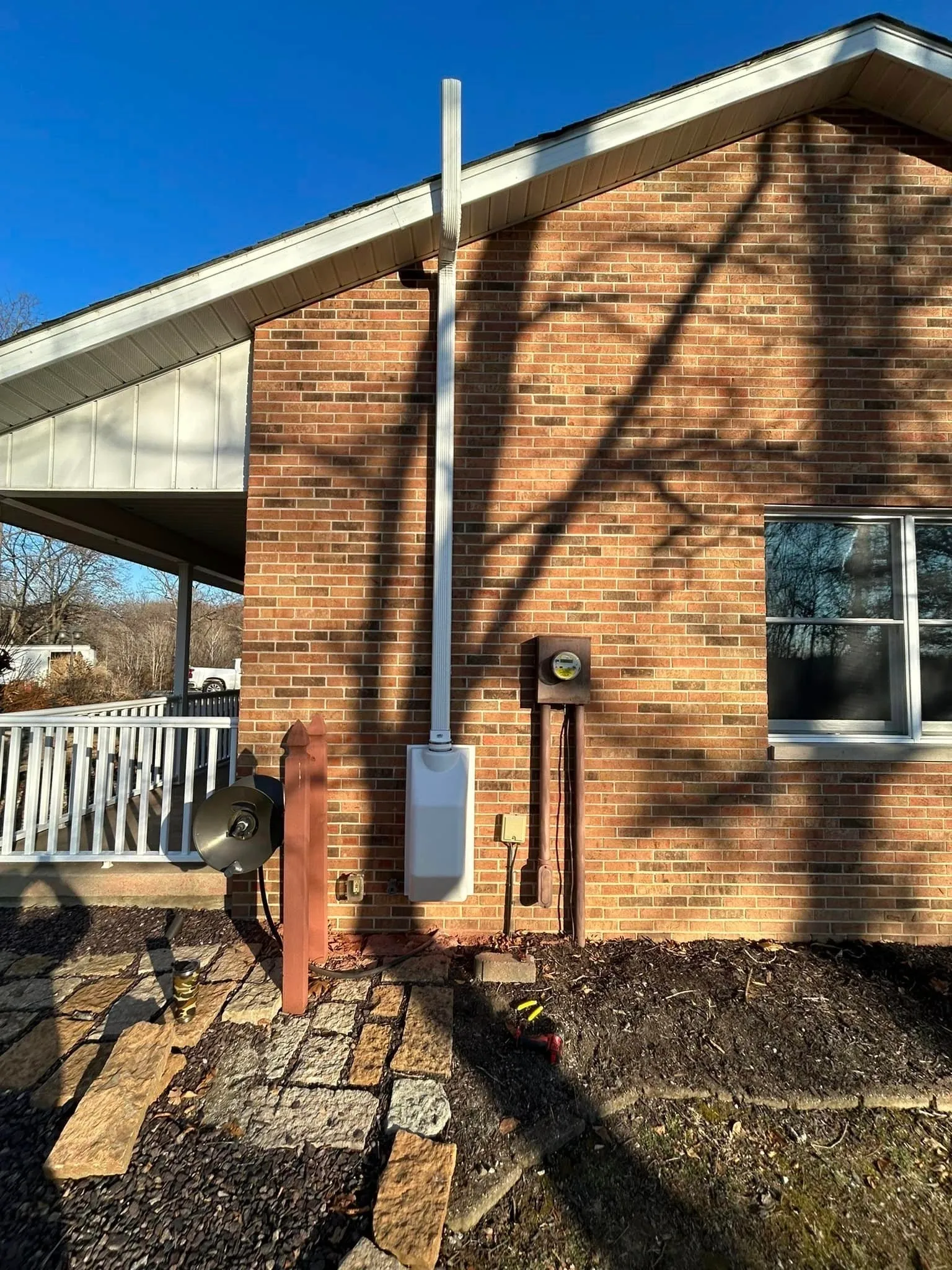
After installation, a post-mitigation radon test is standard. I usually run a continuous monitor for at least 48 hours to confirm that levels have dropped below 2 picocuries per liter. Anything below that is a solid result. The National Radon Proficiency Program certifies professionals who know how to do this properly. I would not trust a system installed by someone who cannot show that credential.
Maintenance and Warranty
A radon mitigation system is not a set-it-and-forget-it device. The radon mitigation system fan will eventually wear out, typically after five to ten years. A good radon mitigation system warranty covers parts and labor for at least five years, but read the fine print. Some warranties exclude damage from power surges or neglect. I have also seen systems where the homeowner removed the fan during a renovation and never replaced it. The levels came right back.
If the basement is used as a living space, an air exchanger can help maintain indoor air quality by bringing in fresh outdoor air while exhausting stale air. But that is a separate system. It does not replace soil depressurization. One complements the other. The goal is to keep the radon in basement spaces as close to outdoor levels as possible.
New Construction Is Not Immune
Many people assume that a new house is automatically safe. That is not true. I have tested brand-new homes where the radon in basement readings were 6 picocuries per liter. The reason is that radon-resistant new construction techniques are not always followed. The code may require a passive system, but if the gravel layer is missing or the vapor barrier is torn, the system will not work. I always recommend that buyers of new homes request a radon test before closing. It is a small price for peace of mind. And if the builder used a gypsum concrete subfloor, you need to be extra careful about sealing before the floor covering goes down.
Kansas City radon levels have been a topic of discussion among mitigation contractors for years. The geology there is similar to St. Louis, and I have seen the same patterns. Homes on the same street can have vastly different readings depending on the soil conditions under each foundation. That is why generalization is dangerous. You have to test your own home.
The Bottom Line
Radon is a local problem with a simple solution. Test your basement. If the levels are high, hire a qualified radon mitigation contractor who will design a system specific to your home. Look for someone certified by the National Radon Proficiency Program. Ask about post-mitigation verification and a warranty. The work is not glamorous, but it is effective. I have seen families go from living with 15 picocuries per liter to less than 1, and the relief on their faces is real. They no longer wonder what is in the air their children breathe while playing in the basement. That is worth the effort.